


×

The Sustainable Development Goals (SDGs), adopted by all United Nations Member States in 2015, provide a shared global framework for peace, prosperity, and environmental protection. The 17 Goals address interconnected challenges including poverty, health, education, gender equality, climate action, and sustainable economic growth.
While awareness of the SDGs has increased significantly across Europe, a critical challenge remains: how can individuals translate global objectives into concrete, measurable daily actions?
The Self-SDG project, co-funded by the Erasmus+ Programme of the European Union, was developed to respond precisely to this question.
The SDGs are ambitious and comprehensive. However, for many young people, they may appear abstract or distant from everyday life.
Self-SDG bridges this gap by transforming policy-level objectives into a structured, interactive, and user-centred digital experience.
Through the Self-SDG mobile application, users are invited to:
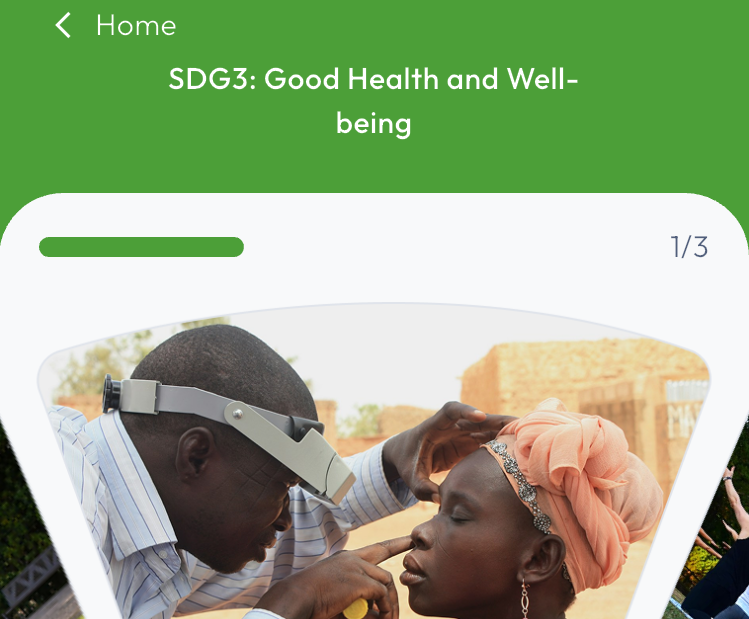
The application provides a clear and visually engaging interface that allows users to slide through the 17 Goals, discover their meaning, and understand their relevance in real-life contexts.
One example within the app is SDG 3: Good Health and Well-Being. Users are presented with concise explanations about global health challenges, such as preventable deaths and access to universal healthcare.
By posing reflective questions — such as “Are we ensuring healthy lives for all?” — the app encourages users to consider their own role in supporting health-related outcomes.
This approach transforms passive reading into active engagement.
Rather than simply providing statistics, the Self-SDG app connects global data to individual awareness and behavioural reflection.
A central feature of the application is its self-assessment system.
Users progress through structured reflection steps, responding to targeted prompts related to daily habits, consumption patterns, community involvement, and environmental behaviour.
Based on their responses, the app generates:
This methodology aligns with research conducted within the Self-SDG project, demonstrating that behavioural change is more effective when individuals receive measurable and personalised feedback.
Recognising the importance of digital engagement in modern education, the app integrates gamification elements that enhance motivation and sustained interaction.
Features include:
The welcoming interface invites users to “Discover the World of SDGs” and motivates them to start making an impact immediately.
By combining education, technology, and behavioural insights, Self-SDG supports long-term engagement rather than one-time awareness campaigns.
The Self-SDG application contributes directly to European priorities by:
Through Erasmus+ funding, the project demonstrates how transnational cooperation can generate practical tools that connect policy objectives with individual empowerment.
Achieving the Sustainable Development Goals requires coordinated action at all levels — institutional, national, and individual.
The Self-SDG mobile application provides a structured pathway for individuals, particularly young people, to understand where they stand and how they can improve.
By transforming global goals into personal commitments, the app reinforces the principle that sustainable development is not only a policy framework — it is a shared responsibility.
For more information about the Self-SDG project and to explore the application, please visit:
https://selfsdg.eu